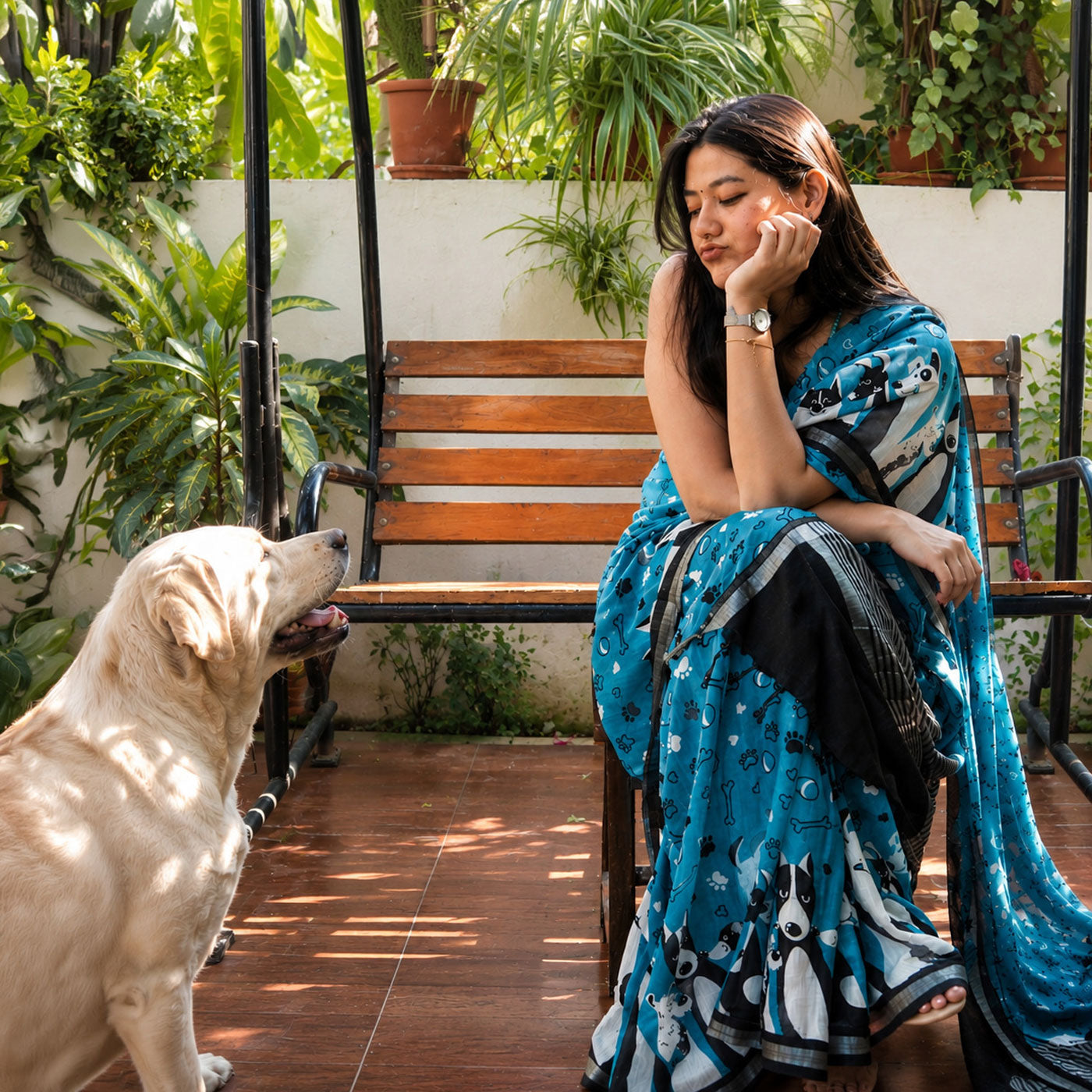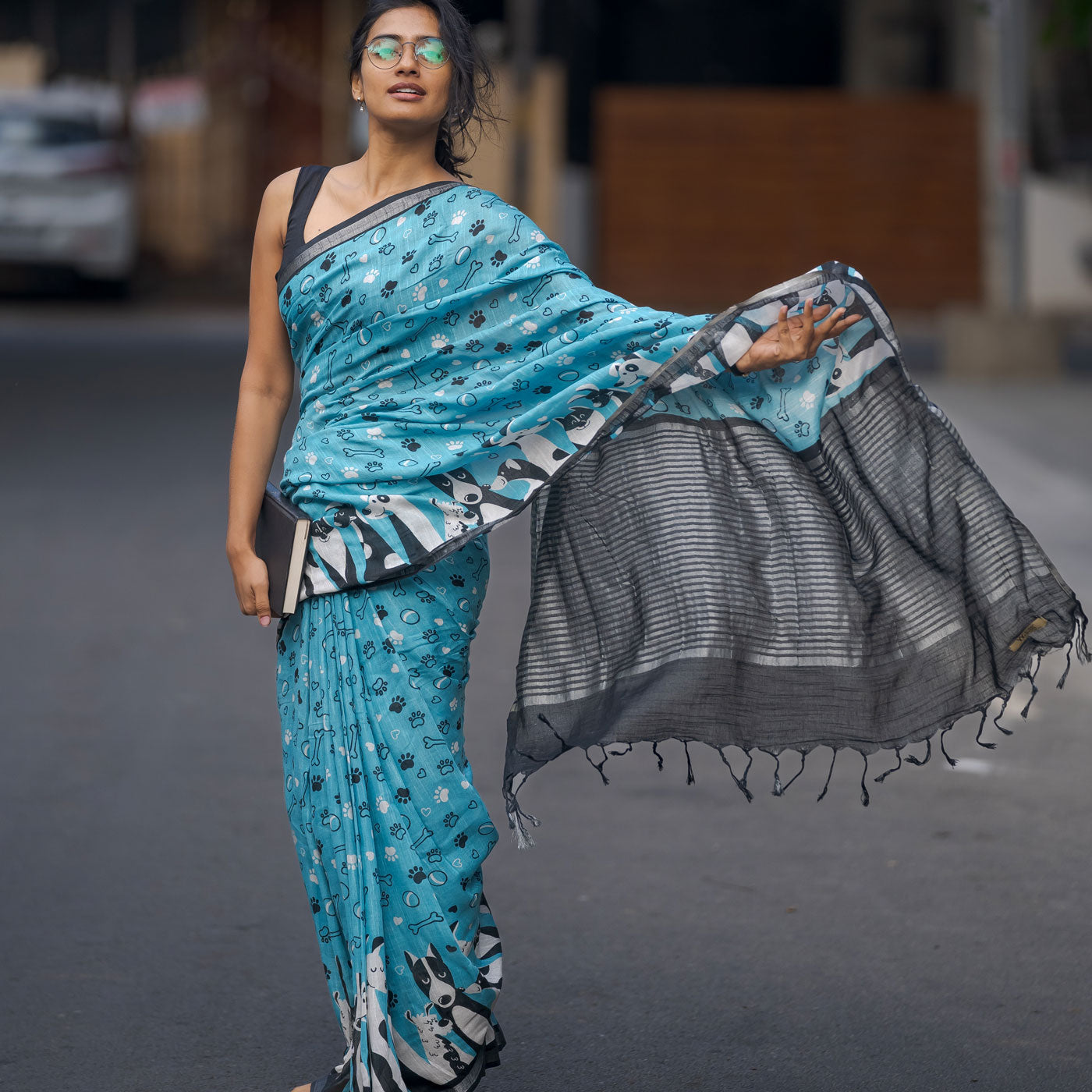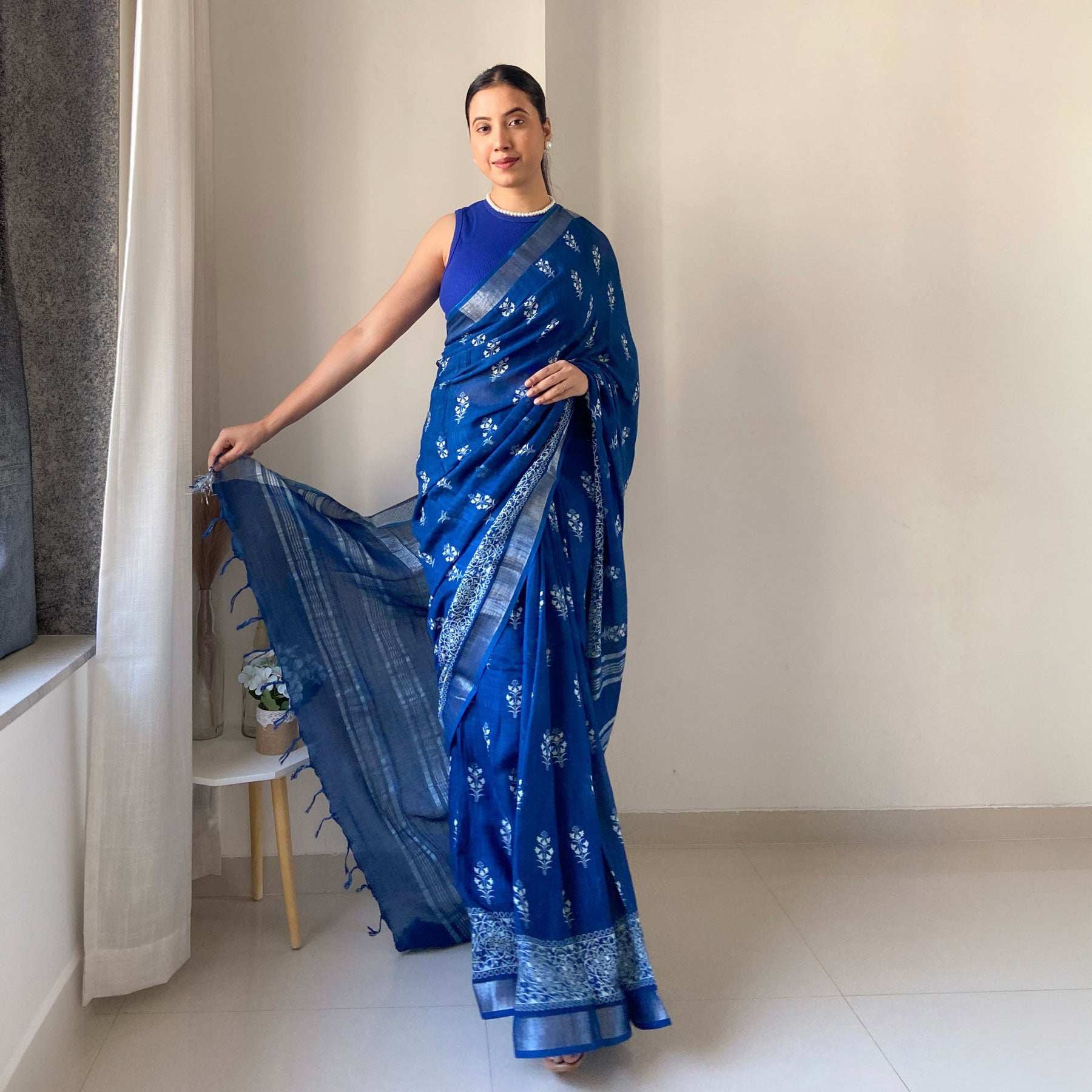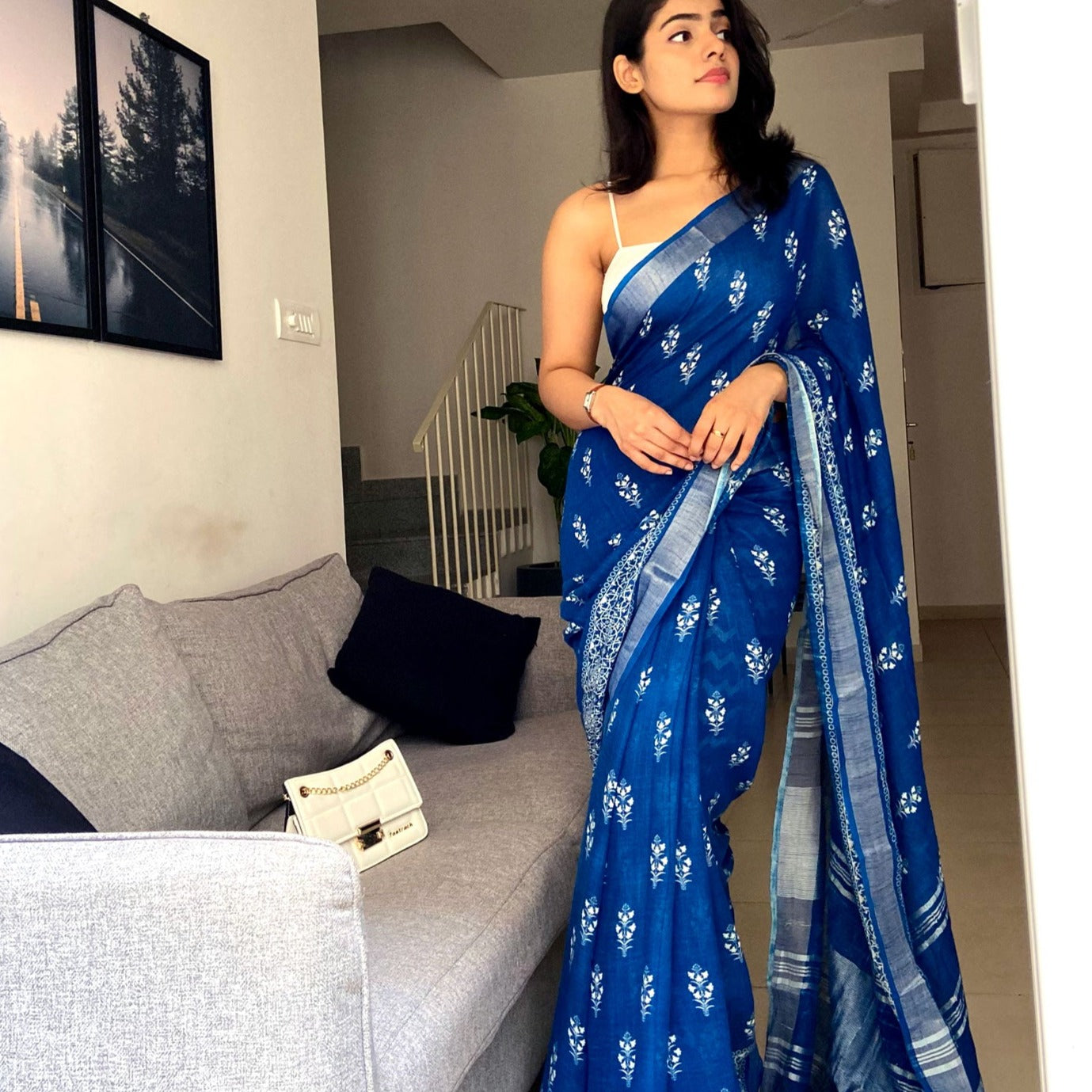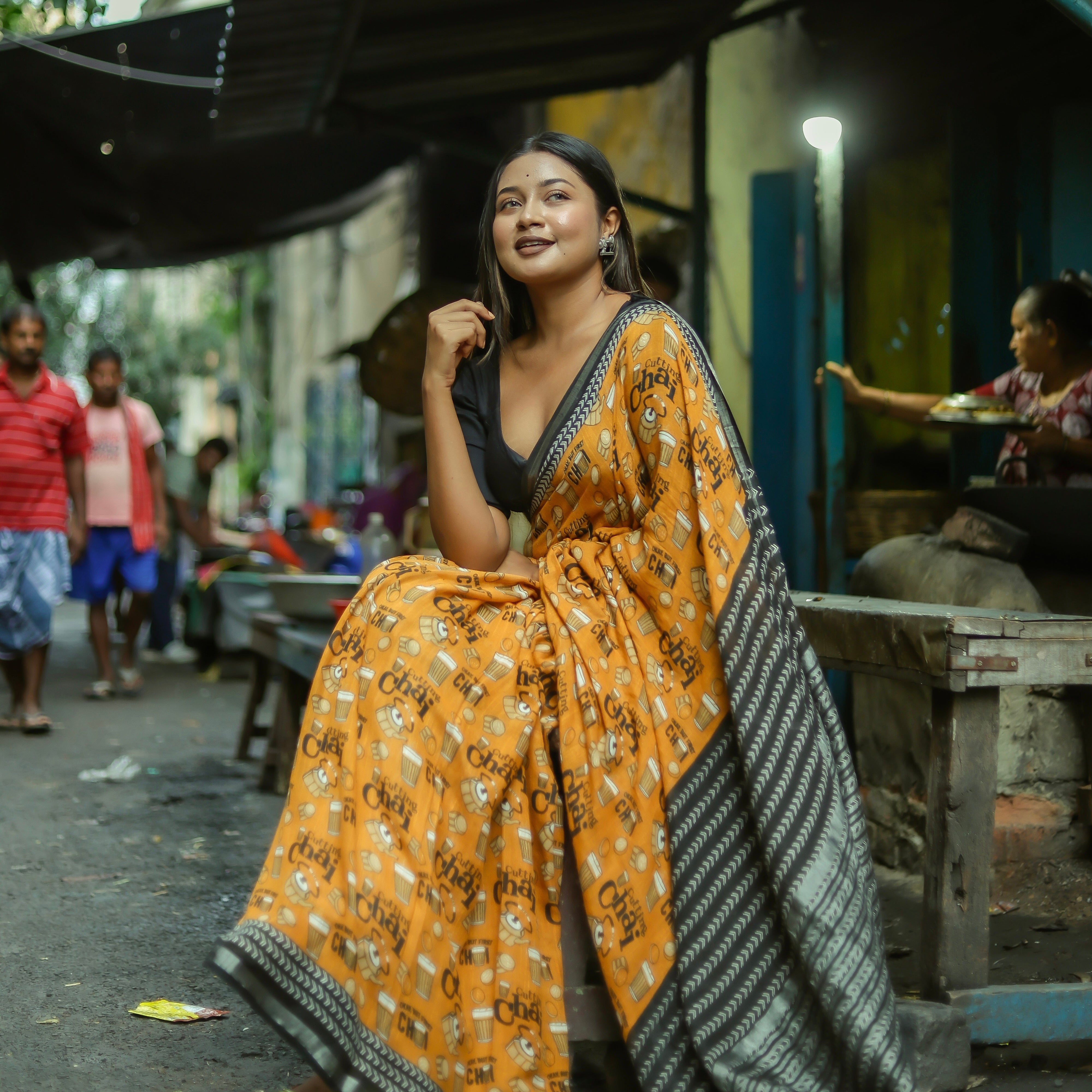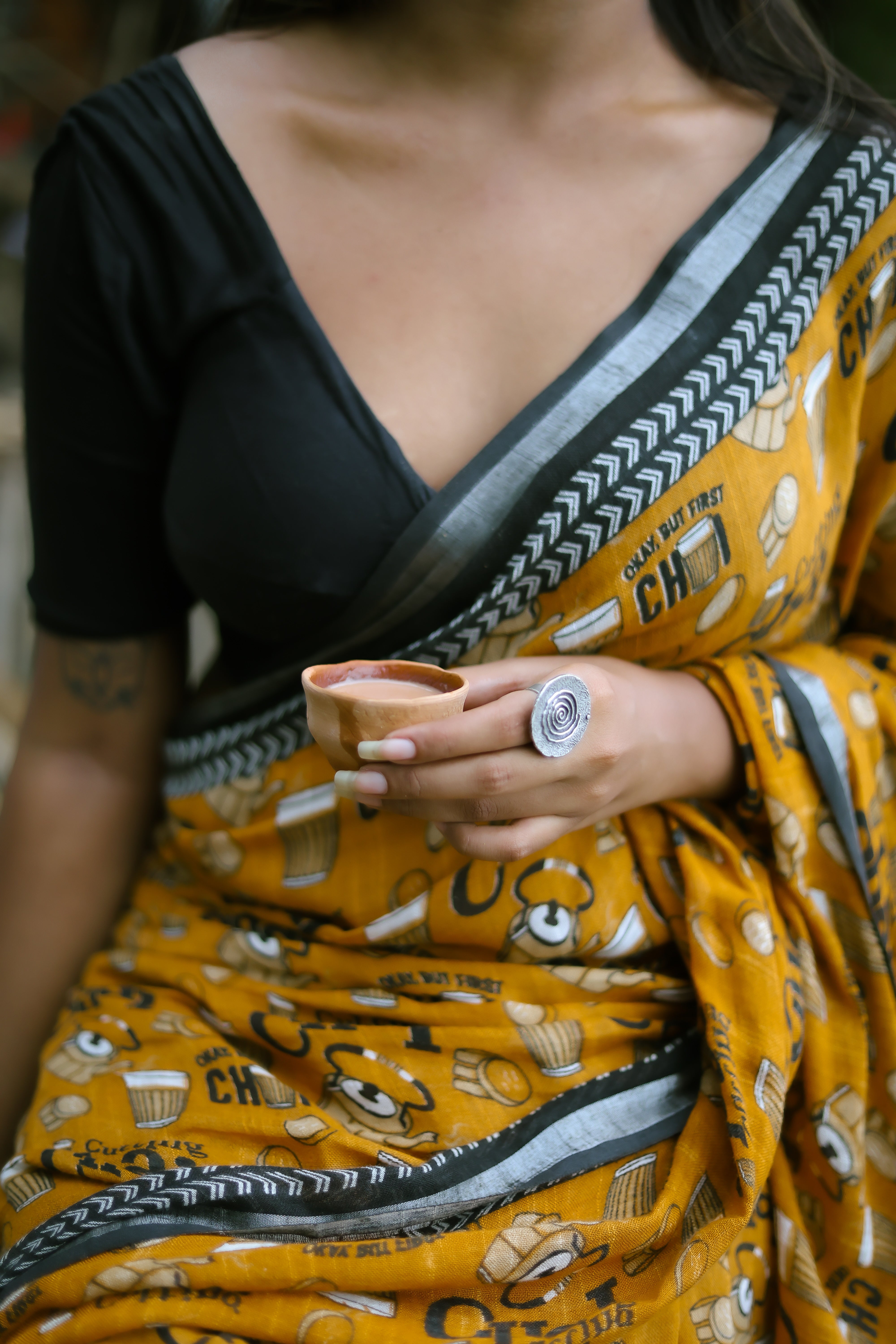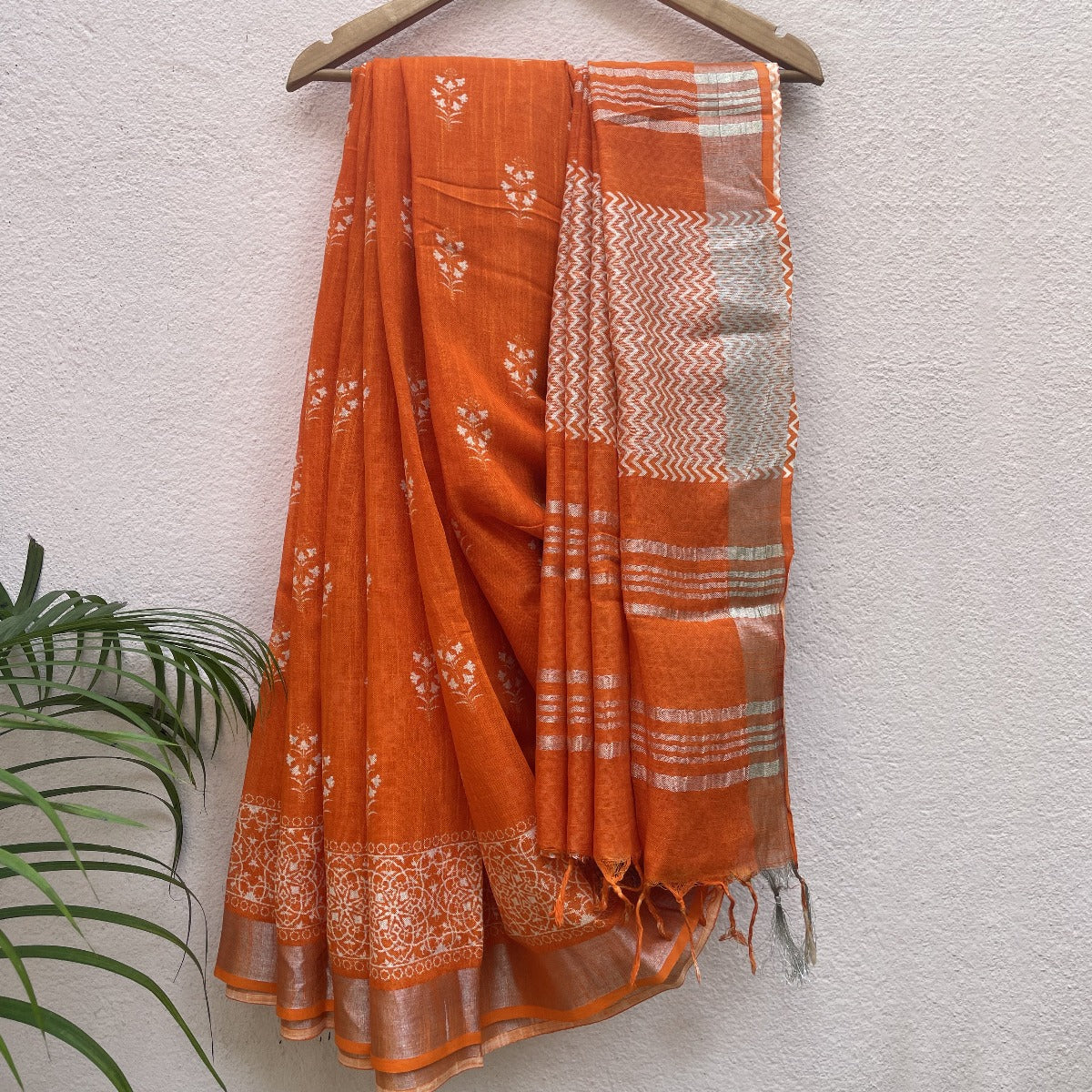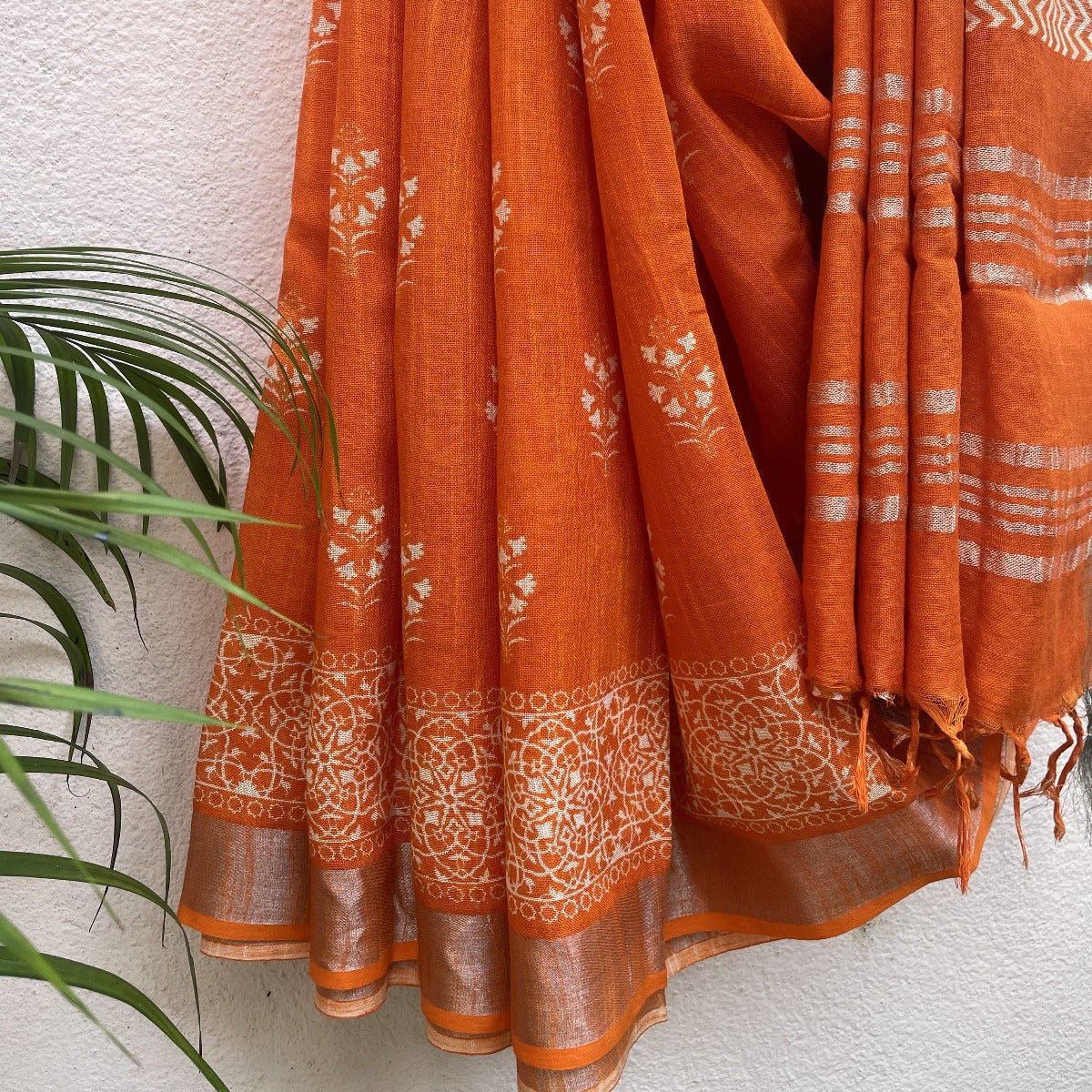

There's a colour that doesn't announce itself. It doesn't flash. It settles the way dusk settles over a city, the way a familiar song returns to you in the middle of an ordinary afternoon.
That colour is indigo. And if you've ever worn a deep indigo saree, the kind that moves a little differently in evening light, that feels cool against your skin and somehow also warm in the memory of it - you already know that this isn't really a colour story. It's something else entirely.
It's a story about belonging. About how certain things carry a kind of intelligence that outlives trend cycles and fashion weeks and fleeting aesthetics. Indigo sarees have been worn by women across generations of Indian life, and yet when a 26-year-old drapes one today for her friend's morning wedding, she doesn't feel like she's wearing the past. She feels, somehow, completely herself.
This is what we want to explore - not the history lesson, not the museum-case reverence, but the living, breathing presence of indigo in the modern Indian wardrobe. The way it makes a woman look like she made a choice, not followed a trend.
Indigo Is Not Simply Blue

Speak the word "blue" and a hundred different colours float up. Sky blue. Cobalt. Cerulean. Navy. But indigo is none of these, exactly. It sits in the space between blue and violet - a colour that seems to shift depending on the light, the fabric, the hour of day. On cotton, it's dusty and earthy. On silk, it becomes something almost architectural. On a handwoven fabric with a printed motif over it, it reads like a painting you want to stand close to.
What makes indigo feel so particular is that it isn't a cheerful colour, nor is it a solemn one. It doesn't demand an occasion or a mood. It simply coexists with laughter, with quietness, with a busy Tuesday morning and with a long monsoon evening. Fashion designers and colour theorists have spent decades trying to explain why deep blues calm the nervous system, slow the breath, make us feel simultaneously alert and at rest. But really, a woman who has worn an indigo saree knows this instinctively. It does something to how you carry yourself.
Perhaps it's because indigo has always existed at thresholds. The threshold between day and night. Between traditional and contemporary. Between something handed down and something chosen fresh. For contemporary printed indigo sarees especially, that threshold is where the most interesting things happen where a centuries-old dye meets a modern design sensibility and creates something that feels entirely now.
"Indigo sits in the space between memory and presence — familiar enough to feel like home, striking enough to make you look twice."
A History That Still Breathes
The relationship between India and indigo is ancient and complicated and deeply beautiful. The dye itself extracted from the Indigofera tinctoria plant has coloured Indian textiles for over four thousand years. It travelled along trade routes as one of the most coveted substances in the world. The word "indigo" is derived from the Greek indikon, meaning "from India." The colour was, in the most literal sense, ours first.
But what matters more than the historical superlative is what happened within that history - the craft traditions that grew up around indigo dyeing in Rajasthan, in Andhra Pradesh, in Bengal and beyond. The block printers who developed patterns specifically to work with indigo's temperament. The resist-dye artists whose dabu and batik techniques created the white and cream motifs that float over deep blue grounds like moons over water. The weavers who learned how to handle indigo-dyed thread differently than cotton thread because the dye changes the way fabric drapes.
This knowledge is not abstract. It lives in hands, in workshops, in the muscle memory of artisans who learned from parents who learned from grandparents. And when we take that knowledge and bring it into the language of contemporary printed Indian sarees into design that speaks to how a woman moves through the world today - something remarkable happens. The craft doesn't become lesser for being current. It becomes more alive.
There is a woman in Rajasthan whose grandmother wrapped herself in a deep blue saree for every significant moment of her life - for her daughter's wedding, for puja, for receiving guests. That woman's granddaughter now drapes an indigo printed saree for her own moments. Different saree. Different life. The same blue, carrying the same quiet authority.
Why Indigo Feels Like Breath
There's a reason we reach for certain colours when we want to feel like ourselves. Not dressed up, not performing - just present. For many women, indigo occupies that particular register. It's not the colour you wear when you want to be loud, and it's not the colour you wear when you're trying to disappear. It's the colour you wear when you simply want to be.
Psychologists who study colour and emotion talk about deep blues as colours of clarity - shades that slow racing thoughts, that create a sense of depth and groundedness. Put a woman in an indigo saree in the right light and watch how her posture changes slightly. There's something about the colour that invites a particular kind of ease. A quiet confidence that doesn't announce itself.
This is especially true of printed indigo sarees - where a motif, a texture, a design element introduces just enough movement to keep the eye interested. The indigo ground holds everything together while the print gives the saree its personality. A block-printed floral in cream on indigo feels both artisanal and absolutely modern. A geometric resist-dye pattern in white on deep blue feels architectural. Neither tries too hard. Both feel intentional.
In a wardrobe full of choices, an indigo saree is the one that makes the choosing easy. It pairs with nearly anything, looks effortless at nearly any occasion, and always manages to make the wearer look considered. Not overdressed. Considered.
How Young Women Are Finding Indigo Again
Something interesting has been happening in the way younger Indian women - women in their twenties and early thirties are approaching sarees. Not with obligation, and not with irony, but with a kind of genuine curiosity. The question has shifted from "do I have to wear a saree?" to "which saree actually feels like me?"
And increasingly, the answer is indigo.
Part of this is aesthetic. Young women today are drawn to design that has a visual intelligence - clothes that look like someone thought carefully about them. A well-designed printed indigo saree, with its layered tones and considered motifs, reads as exactly that kind of object. It doesn't look mass-produced. It looks like it was made with an opinion.

Part of it is also about slowness. In a moment when fast fashion has made clothes feel disposable and weightless, there's a growing appetite for objects that carry some gravity. An indigo saree particularly one made with handcrafted or artisan processes has that quality. You can feel that it took time to make. That someone made choices about it. That it will outlast the season.
And part of it, perhaps the largest part is simply that indigo sarees work brilliantly for everyday modern Indian life. They don't require elaborate draping expertise. They don't demand specific jewellery or specific hair. A contemporary indigo saree with a clean blouse can take a woman from a design studio to a gallery opening to a rooftop dinner, and at each place she will look exactly right.
"The question has shifted from 'do I have to wear a saree?' to 'which saree actually feels like me?' More and more, the answer is indigo."
Clothing That Carries Weight
The phrase "slow fashion" gets used often enough that it has started to feel abstract — a value statement more than a lived experience. But an indigo saree makes it concrete. Hold one up to light and you can often see the slight variations in tone where the dye absorbed differently. Feel the edge of a block-printed motif and notice how the lines are just ever so slightly imperfect - the mark of a hand and a wooden block, not a machine and a screen. These aren't flaws. They're the record of making.
When you buy a printed indigo saree from an artisan tradition, you are not just buying a garment. You are buying into a process that involves knowing which plant produces the dye, how it behaves in a vat, how long a fabric needs to soak, how many times it needs to be dipped to reach a particular depth of colour. You are buying the result of someone's skilled judgment at every step.
That knowledge doesn't devalue with time. If anything, it becomes more valuable as the saree ages, as the indigo settles into its characteristic soft fade, as the fabric softens with washing and wearing. A well-made indigo saree at thirty looks nothing like it did when it was new and it looks even better. The impermanence of the dye becomes a kind of beauty.
This is what slow fashion actually means, felt rather than theorised. It means choosing something that rewards patience, that grows with you, that you will eventually hand to someone you love and they will wear it, and love it differently, and it will still be beautiful.
"There are clothes you own, and then there are clothes that own a piece of you. An indigo saree tends to be the latter - worn once and then impossible to forget."
The Colour That Stays
Fashion moves fast. Aesthetics shift. One season's favourite palette becomes the next season's dated reference. And yet indigo persists - not because it's immune to taste, but because it sits below the register of trend. It's a colour that belongs to something older and deeper than seasons. It belongs to the long conversation between Indian women and the cloth they have always worn with such authority.
A printed indigo saree is many things at once. It's an object of craft and design. It's a contemporary garment that looks equally at home in a modern context. It's a connection to a textile tradition that is still very much alive. And on a purely sensory level, it's simply beautiful - in that particular way that things which have been made slowly and carefully and with real skill are always beautiful.
You don't need a special occasion for it. You don't need a specific age or style identity. You just need to drape it, stand in front of a window in good light, and notice how the blue settles around you. How it changes the quality of the room. How it makes you, for a moment, feel entirely exactly as you are.
That's the blue that never leaves.